Stretch Ceilings: Complete Guide to Materials, Installation and Applications
Comprehensive guide to stretch ceilings: membrane materials (PVC, polyester fabric), surface finishes (matte,






06.04.2026 | Interior Inspirations
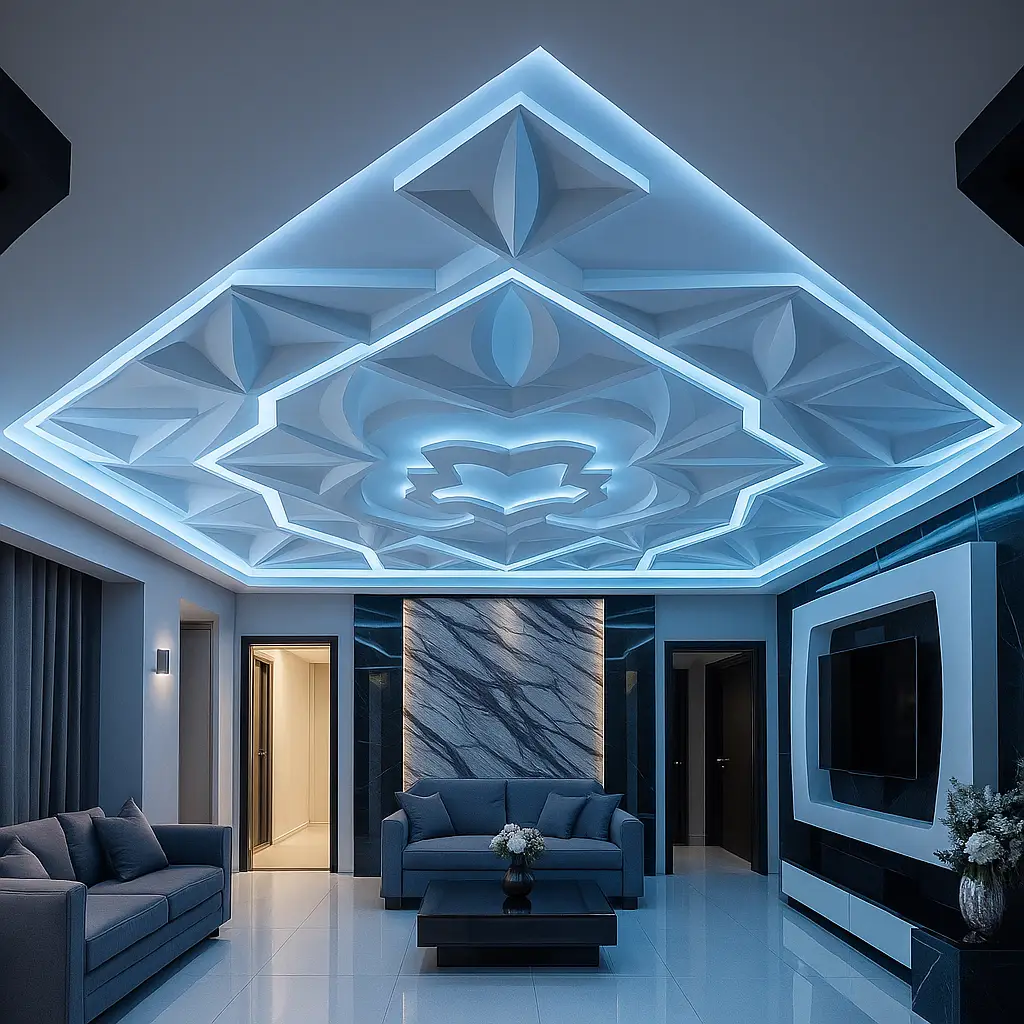

A 3D stretch ceiling is a printed ceiling in which LED backlighting behind the membrane gives the graphic an impression of depth: with the light off you see an ordinary print, when it is on the image glows and appears three-dimensional. The structure has three layers:
The more evenly the light is spread behind the membrane, the cleaner the effect. The quality of a 3D ceiling is therefore decided not so much by the graphic as by the choice of modules, the depth of the light box and the care taken in installation. The general principles are described in our guide to stretch ceilings.
The graphic is printed directly on the membrane. Backlit ceilings use translucent PVC film: the print keeps its colours with the light off, and with the light on it transmits light and gains depth. Fabric (polyester) membranes can also be printed, but they are opaque and backlighting has little effect on them.
The basis of a 3D ceiling is LED modules with a wide-angle lens. They are arranged on the ceiling slab in a regular grid, and the wide optics blend the light of neighbouring modules so that there are no brighter points (hot spots) on the membrane. The card of each module gives the minimum distance from the membrane: below it, individual modules become visible through the film.
| Module | Power / voltage | Light colour | Beam angle | Min. distance from membrane |
|---|---|---|---|---|
| HIGH EFFICIENCY | 1.5 W / 24 V | 4000 K, 6500 K | 170° | 100 mm |
| POWER | 5.0 W / 12 V | 4000 K, 6500 K | 170° | 200 mm |
| UNI CCT | 0.72 W / 12 V | 3000–6500 K (adjustable) | 170° | 100 mm |
| RGB LENS | 0.72 W / 12 V | RGB | 170° | 80 mm |
| RGBW CHIP | 0.96 W / 12 V | RGBW (W = 6000 K) | 140° | 100 mm |
| MINI | 1.0 W / 24 V | 3000, 4000, 5000, 6500 K | 175° | 60 mm |
The installer chooses the grid density for the object: the shallower the light box and the darker the graphic, the more densely the modules are placed; there is no universal number of modules per square metre. The HIGH EFFICIENCY module has an IP65 housing, which matters in damp rooms. More in the article on LED modules.
LED strips will not replace modules for backlighting the whole surface, but they complement a 3D ceiling with a line of light around the perimeter or along the division between membranes. This is what the GAMMA series LED profiles are for: the number in the name GAMMA 20 / 30 / 50 is the approximate width of the light line in millimetres, not the width of the strip. The channel is wider than the strip: GAMMA 30 takes two strips side by side, GAMMA 50 up to three 12 mm strips. GAMMA 10 is a separator for joining two membranes, for example a printed insert and a single-colour ceiling; no LED strip is fitted in it.
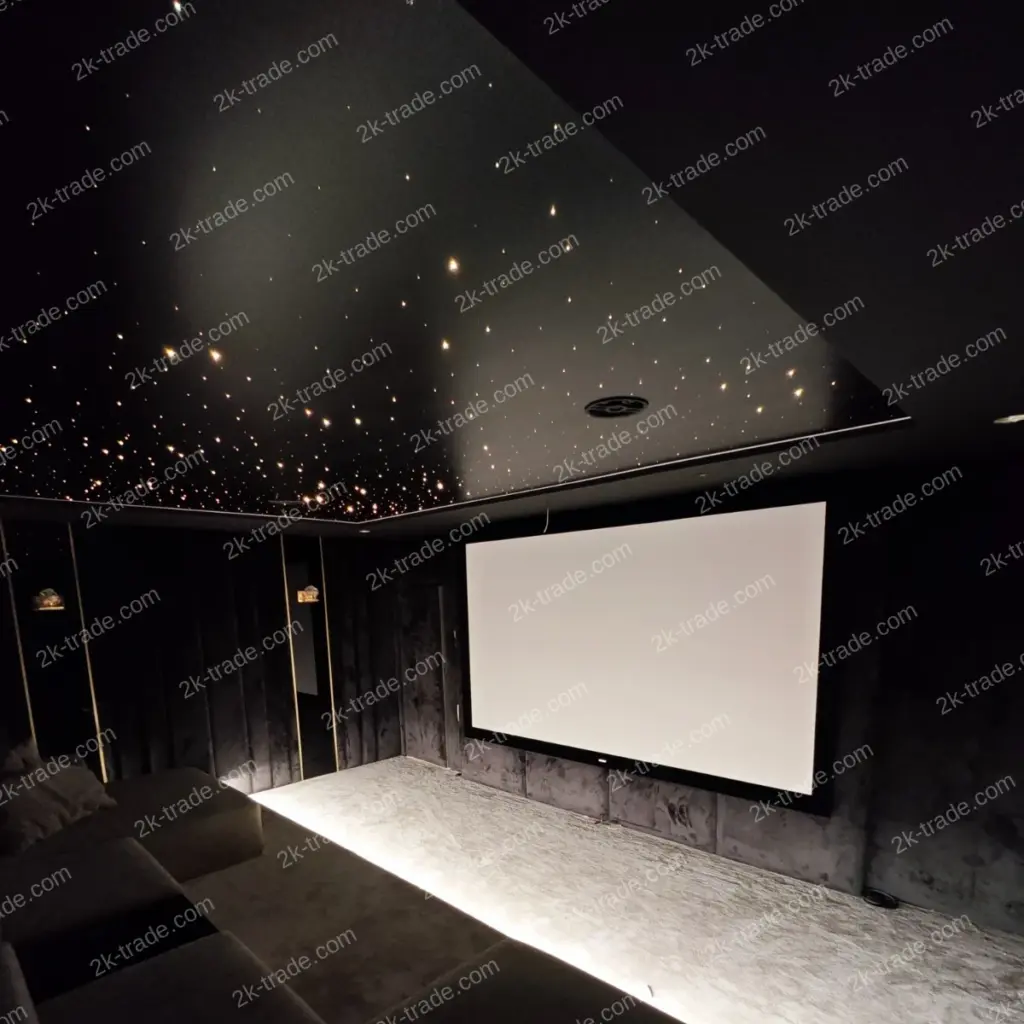
A starry sky is a separate technique: a dark membrane with the fibres of fibre-optic lighting passed through it, or with point modules, which can be combined with a print of the night sky. Details in the article on fibre-optic LED lighting.
This is the most frequently confused point. The depth of the light box, i.e. the distance between the membrane and the ceiling slab, does not follow from the profile name but from the chosen module: the card gives the minimum distance (from 60 mm for MINI to 200 mm for POWER), and the installer adds a margin for even light. The level of the membrane is set by the installation: with wall profiles the installer sets the profile line on the wall, with SU profiles fixed to the slab the suspension structure decides. So there is no single “minimum room height”: the room loses as much as the planned depth of the light box. For comparison, an ordinary stretch ceiling on a wall profile lowers the room by a few centimetres: the profile is about 3 cm high plus the installer’s margin.
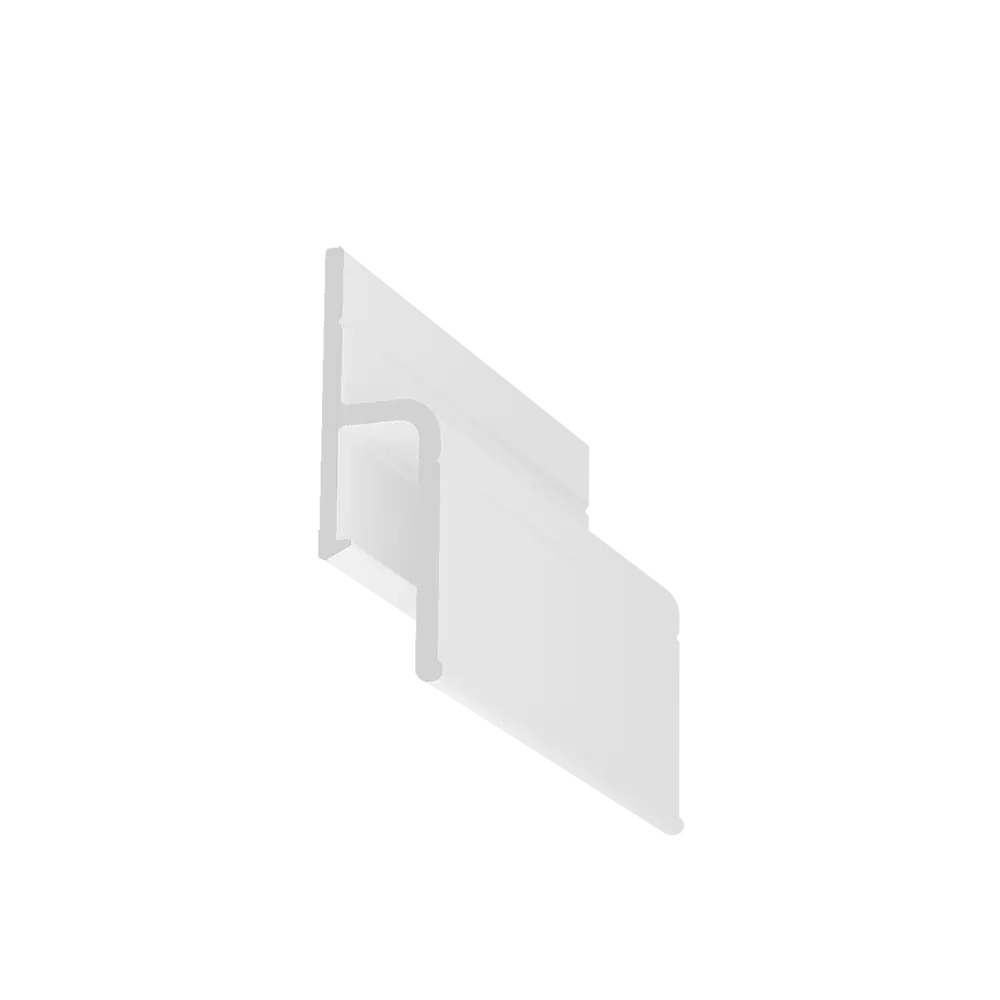
A 3D ceiling is installed on the same basic profiles as any stretch ceiling. Two naming systems coexist in the catalogue: in the CLASSIC and COMFORT series the number in the name is approximately the mass of one running metre in grams (raw, unpainted), and in the GAMMA and GK LINE IN series it is the width of the light line in millimetres. The CLASSIC 125 and CLASSIC 200 profiles have the same height of about 32 mm; they differ in wall thickness and stiffness.
The installer chooses the stiffness for the object, not from a table. Profiles are sold in 2 m lengths. A full overview of the types is in the catalogue of stretch ceiling profiles.
The modules in the table run on 12 V or 24 V DC; with large ceilings and long cables, 24 V gives lower voltage drops and more even brightness at the end of the line. The LED power supply (Mean Well, among others) is sized to the total power of the modules with a reserve, and it is placed where it is accessible for service, with a 230 V supply point.
UNI CCT modules smoothly change the tone of white, and RGB and RGBW the colour of the backlighting: a sky graphic looks different in daylight white than in the blue or violet of dusk. This requires an LED controller of the right type (CCT, RGB or RGBW) and a remote control or wall panel; there are also Zigbee controllers for smart-home integration.
Projects of the installation partner GRAF Ceilings & Walls / ANVAPOL (sufitynapinane.eu), materials from the 2K-Trade catalogue:
The partner’s prices are indicative: from 110 zł/m² including material and installation.
2K-Trade sells components; the current prices of profiles, modules, power supplies and controllers are on the product cards. The cost of a finished ceiling depends on the graphic, the module density and the shape of the room; the installation partner quotes indicative prices from 110 zł/m² including material and installation.
Yes. The perimeter profiles, LED modules and power supply stay in place; only the printed membrane is replaced. No building work is required.
As much as the depth of the light box: the minimum distance of the module from the membrane given on the product card (from 60 mm for MINI to 200 mm for POWER) plus the installer’s margin. The number in the profile name, for example CLASSIC 200, is the mass in g/m and has nothing to do with the drop height.
Yes. PVC film is waterproof, and for damp rooms it is worth choosing modules in an IP65 housing, for example HIGH EFFICIENCY, and planning the power supply outside the damp zone.
All the elements of the structure are in one catalogue: stretch ceiling profiles, LED modules, LED strips, power supplies, controllers and harpoon. We ship worldwide (Poland 1–3 working days, Europe 2–9 working days), and through our own messenger the customer talks to a manager in their own language. Contact us to select the components for a 3D ceiling.
Author: MB 2K-Trade
Comprehensive guide to stretch ceilings: membrane materials (PVC, polyester fabric), surface finishes (matte,
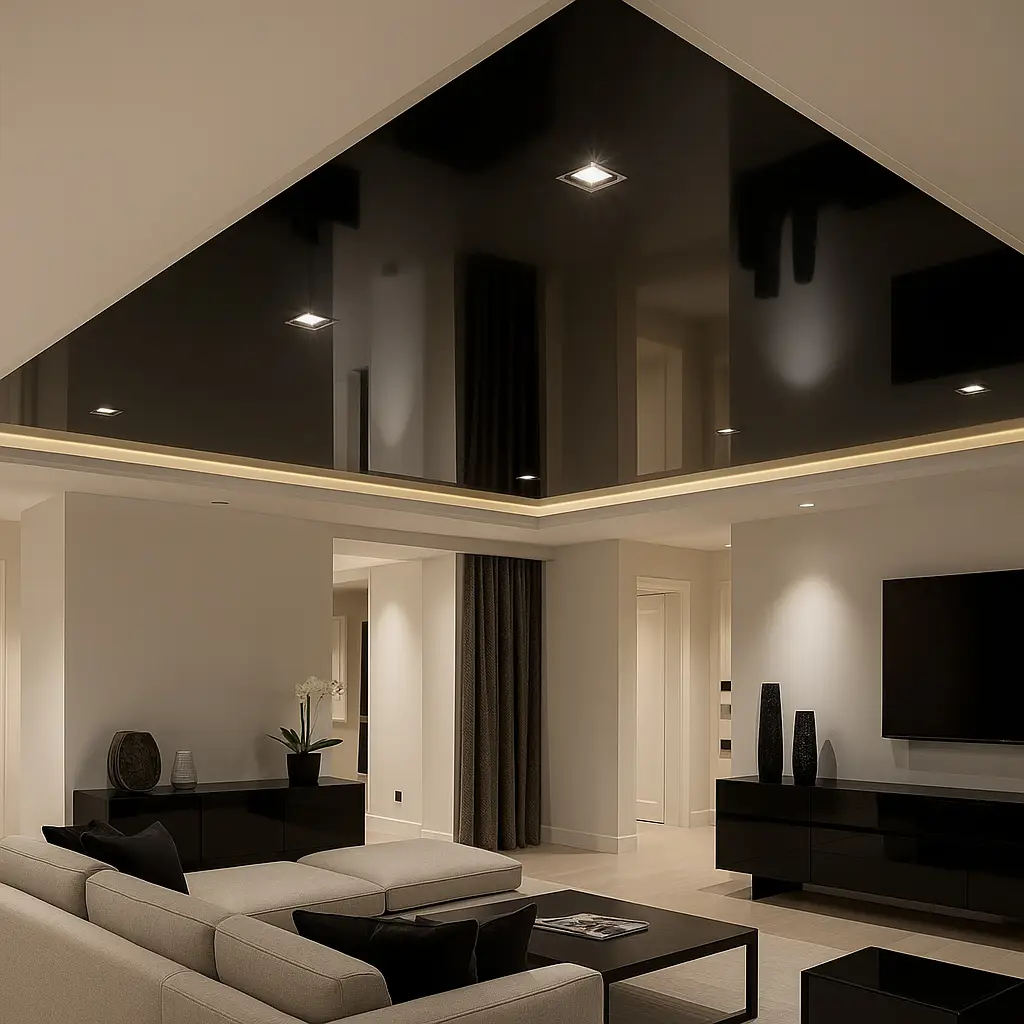
A black stretch ceiling is a PVC or fabric membrane in black, mounted

A black stretch ceiling from the technical side: what each membrane finish (matt,