How to Choose a Stretch Ceiling Profile: Selection Guide
Profile selection guide for stretch ceilings: mounting method (wall or ceiling-mount SU profile),






06.04.2026 | Profiles for Stretch Ceilings
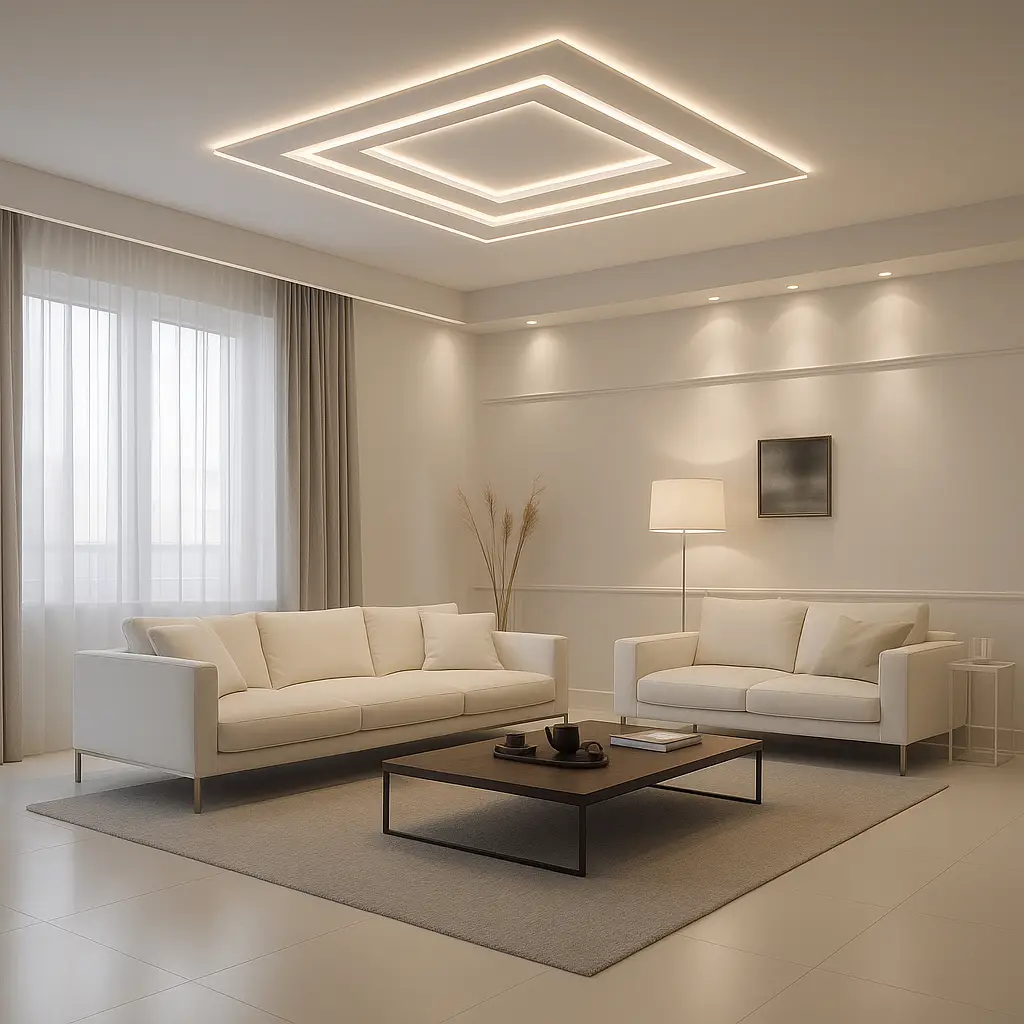
A square frame in a stretch ceiling is one of the most frequently used geometric forms in modern interior design. The construction relies on aluminium profiles that create a recess or a light line in the shape of a square or rectangle. This article covers the profile types used for building frames, their technical parameters, compatible LED strips, and installation guidelines.
The profile choice determines the appearance and function of the frame. Four main construction approaches:
The DUAL DP profile is a dedicated solution for two-level constructions. It creates a distinct step between the recessed centre and the outer section. An LED strip mounted at the level change produces a 360-degree band of light along all sides of the frame. The profile allows two independent membranes (upper and lower), enabling different colours or textures on each level.
The DUAL DP profile is fixed directly to a solid substrate (concrete ceiling, steel structure). The LED strip in this profile is covered by a 20 mm wide flexible diffuser. The height difference between the centre and the outer section follows from the design and the installation, not from the number in the profile name. To build a square frame, the profiles are joined at the corners at 90 degrees.
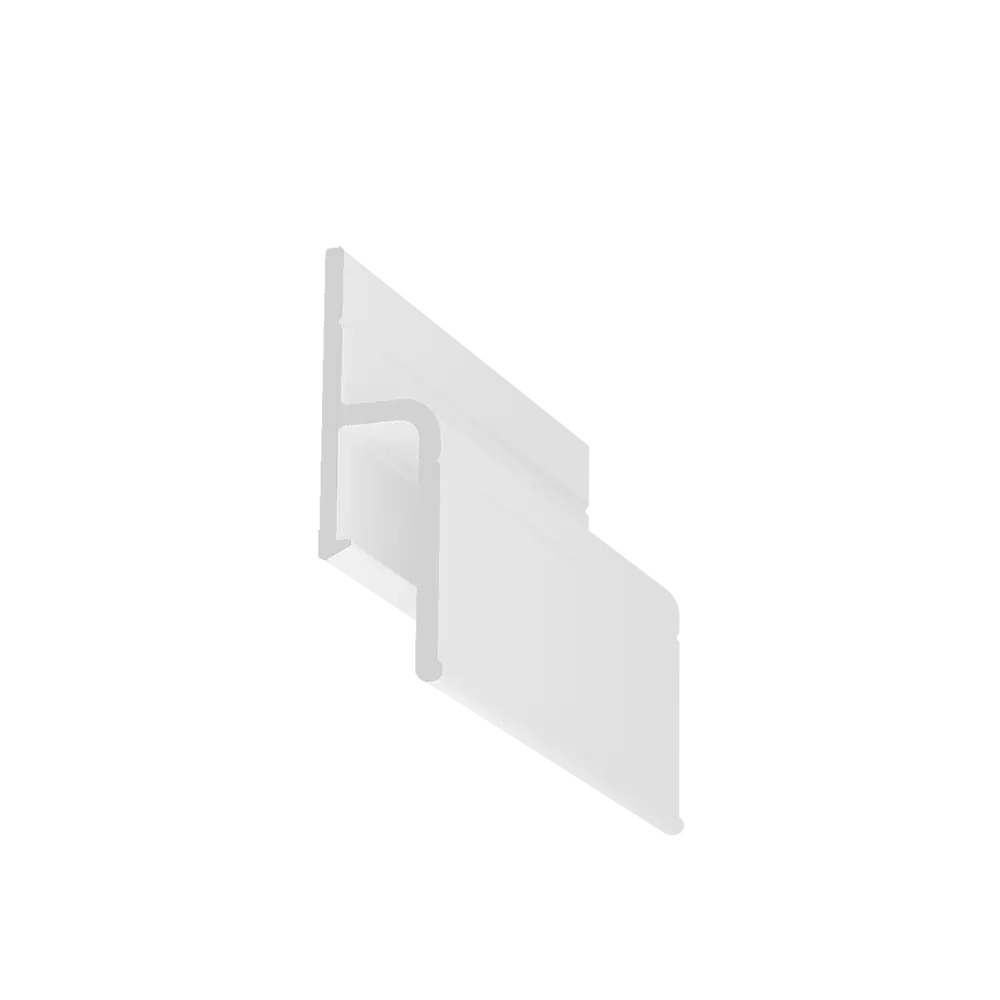
GAMMA 20, GAMMA 30, and GAMMA 50 profiles create a light line flush with the ceiling surface. Instead of a recess, you see an illuminated slot roughly 20, 30, or 50 mm wide. The number in a GAMMA profile name is the approximate width of the light line, not the width of the LED strip: the channel itself is wider — GAMMA 30 takes one or two 8–10 mm strips, and GAMMA 50 several strips. The profiles have an LED strip channel and work with dedicated diffusers (soft or hard, milky) that distribute light evenly with no visible LED dots.
The width of the line is chosen to suit the scale of the room and the intended effect: the narrower GAMMA 20 line works as an accent, while the wider GAMMA 30 and GAMMA 50 can serve as the main lighting — especially GAMMA 50, which is designed for large spaces where the light line is meant to dominate the composition.
The SIGMA-NEO LED profile creates a narrow shadow gap behind which an LED strip is mounted. The effect: a subtle ambient glow along the frame edge, with the profile itself remaining invisible. This solution suits minimalist interiors where subtlety matters — the light line is visible, but its source stays hidden.
The SIGMA-NEO LED profile is fixed to the base ceiling with angle brackets (2 m lengths, approx. 730 g/m). It is used both in frames and in multi-level ceilings with backlighting.
An alternative approach: a closed frame of magnetic track MT-23 mounted flush with the stretch ceiling. Different lamp types — spot reflectors, linear modules, and decorative pendants — attach magnetically to the track. The configuration can be changed without dismantling the ceiling; luminaires slide in and out magnetically.
This solution combines functional and decorative lighting and works well above kitchen islands, dining tables, and reception areas.
| Profile | Visual effect | Light line / gap | LED strip | Application |
|---|---|---|---|---|
| DUAL DP | Step between two levels with backlighting | Step height per design | At the level change, under a 20 mm diffuser | Living rooms, hotels, offices |
| GAMMA 20 | Narrow light line | approx. 20 mm | In the channel, under a diffuser | Bedrooms, small rooms |
| GAMMA 30 | Medium light line | approx. 30 mm | In the channel (1–2 strips), under a diffuser | Living rooms, kitchens |
| GAMMA 50 | Wide light line | approx. 50 mm | In the channel (several strips), under a diffuser | Large rooms, commercial spaces |
| SIGMA-NEO LED | Shadow gap with ambient glow | Narrow shadow gap | Behind the gap | Minimalism, modern classic |
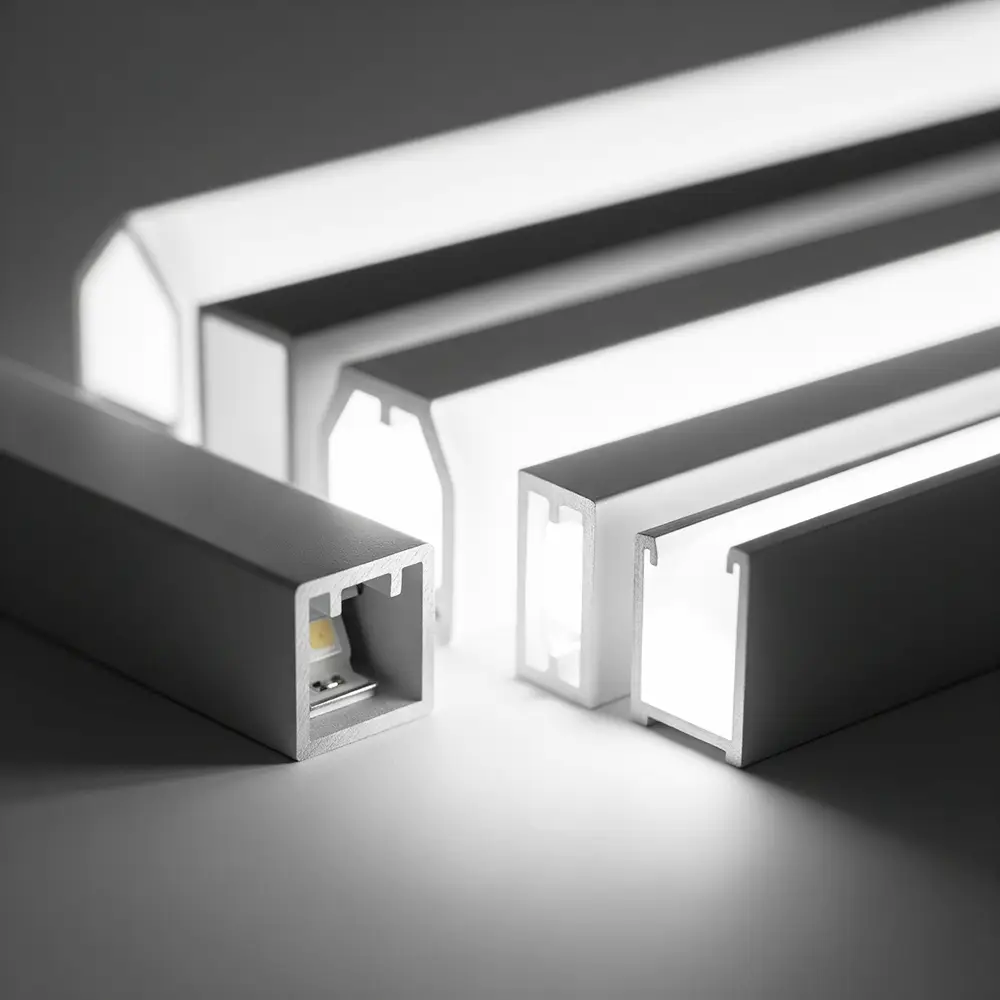
LED strip choice depends on the profile and desired lighting effect. All the models listed run on 24 V DC; the wattages come from the product cards. Recommendations by application:
| Application | Recommended strip | Power (W/m) | Light colour |
|---|---|---|---|
| Decorative accent | SMD 2835 ECO 120 LED/m | 4.8 / 9.6 | 3000 / 4000 / 6000 K |
| Standard illumination | SMD 2835 140 LED/m | 4.8 / 9.6 / 14.4 | 3000 / 4000 / 6000 K |
| Dot-free line (no diffuser) | COB 320 LED/m | 10.0 / 14.0 | 3000 / 4000 / 6000 K |
| Tuneable CCT lighting | COB CCT 608 LED/m | 16.0 | tuneable 2700–6000 K |
| Colour and white (RGBW) | COB RGBW 784 LED/m | 19.0 | RGB + white 4000 or 6000 K |
Important: the gap between the LED strip and the stretch ceiling membrane should be at least 40 mm. A smaller gap causes spot bleed-through — individual LEDs become visible through the membrane. Power supply wattage must be 20% higher than total strip consumption (frame perimeter x W/m x 1.2).
Mark the frame shape on the ceiling using a cross-line laser or chalk line. Check diagonals — the difference should not exceed 2 mm. Mark the profile fixing points at even intervals.
Fix profiles to a solid substrate (concrete ceiling, steel beam) using expansion anchors. Join profiles at corners at 90 degrees — precision mitre cutting is critical for aesthetics. Profiles must be levelled — height difference across the frame perimeter should not exceed 1 mm.
Adhere the LED strip with thermal tape to the profile channel. Connect sections with connectors or solder. Maintain polarity (+/-). Connect the power supply and test — check for even brightness, no flickering, and correct colour. Test before stretching the membrane.
Hang the membrane starting from the centre of each frame edge using harpoon tape. Heat the membrane with a heat gun to 50-60 degrees C. Insert the harpoon into the profile using a spatula. After cooling, the membrane tightens to a perfectly smooth surface.
Snap diffusers (soft or hard) into GAMMA profiles. Fit finishing strips in SIGMA-NEO profiles. Check the lighting effect and correct any imperfections.
The step height does not follow from the number in the profile name but from the design and the installation: the DUAL DP profile is fixed to the ceiling, and the level difference is set by the frame construction. Standard-height apartments use lower steps; high rooms, or spaces where ventilation and cabling need hiding, use higher ones. The exact dimensions are set by the installer for the given project.
Yes, provided you use a higher-wattage strip — e.g. SMD 2835 140 LED/m in the 14.4 W/m variant or COB 320 LED/m at 14 W/m — in 4000 K, and a sufficiently wide profile (GAMMA 30 or GAMMA 50). The total light output grows with the frame perimeter; whether it is enough as the primary lighting depends on the room size and the lighting design.
In installation practice, about 60×60 cm — smaller dimensions make precise membrane stretching and corner assembly difficult. The proportion of the frame to the ceiling is a matter of interior design; there is no universal percentage rule.
Yes. DUAL, GAMMA, and SIGMA-NEO profiles allow any rectangular shape. The only limitation is the ability to cut profiles at 90 degrees and structural stability. Rectangular frames (e.g. 120×200 cm) are as popular as square ones.
Author: MB 2K-Trade
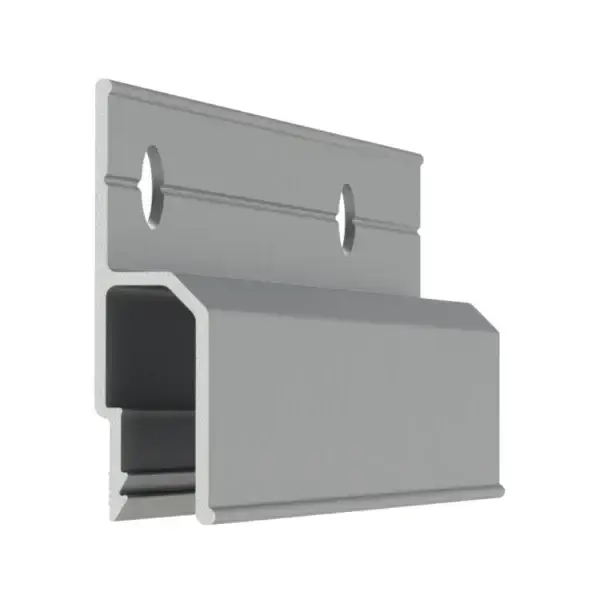
Profile selection guide for stretch ceilings: mounting method (wall or ceiling-mount SU profile),
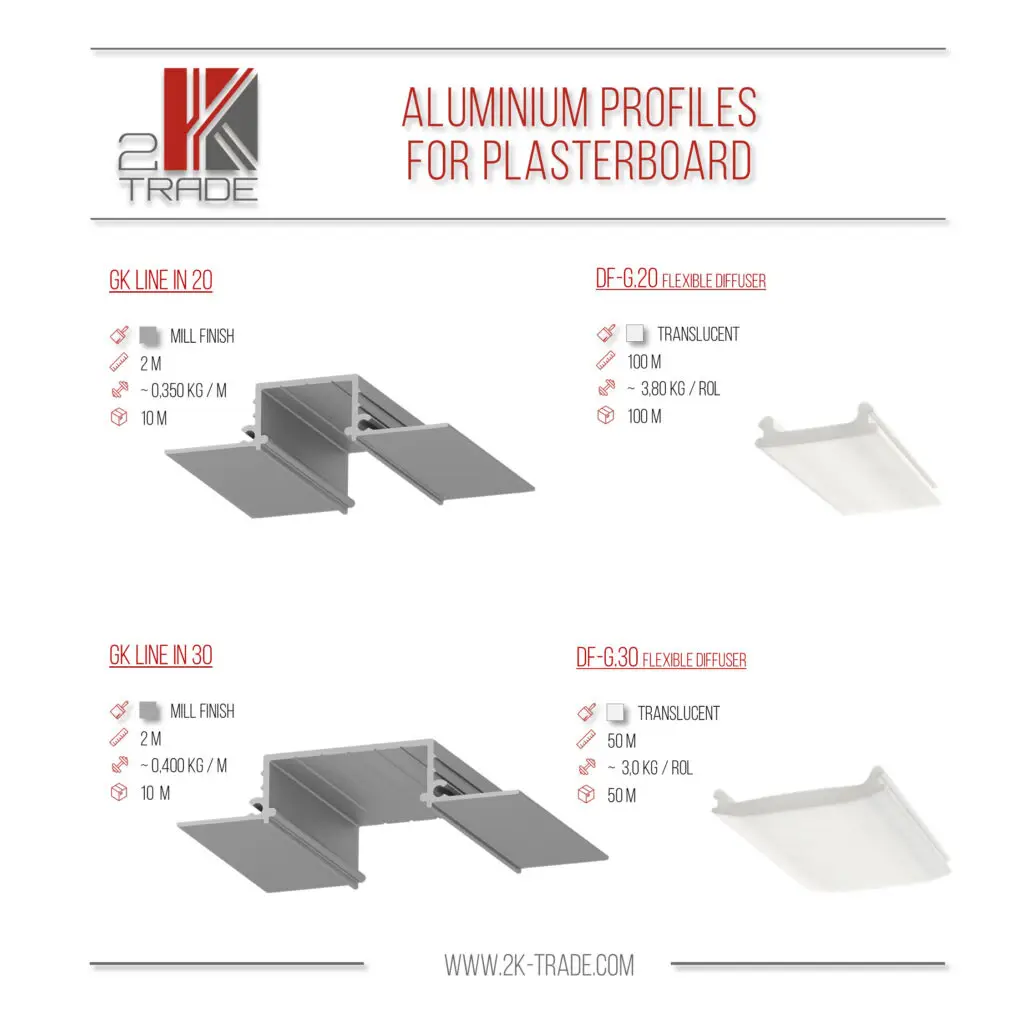
Guide to recessed LED profiles: types (GAMMA series for stretch ceilings, GK LINE
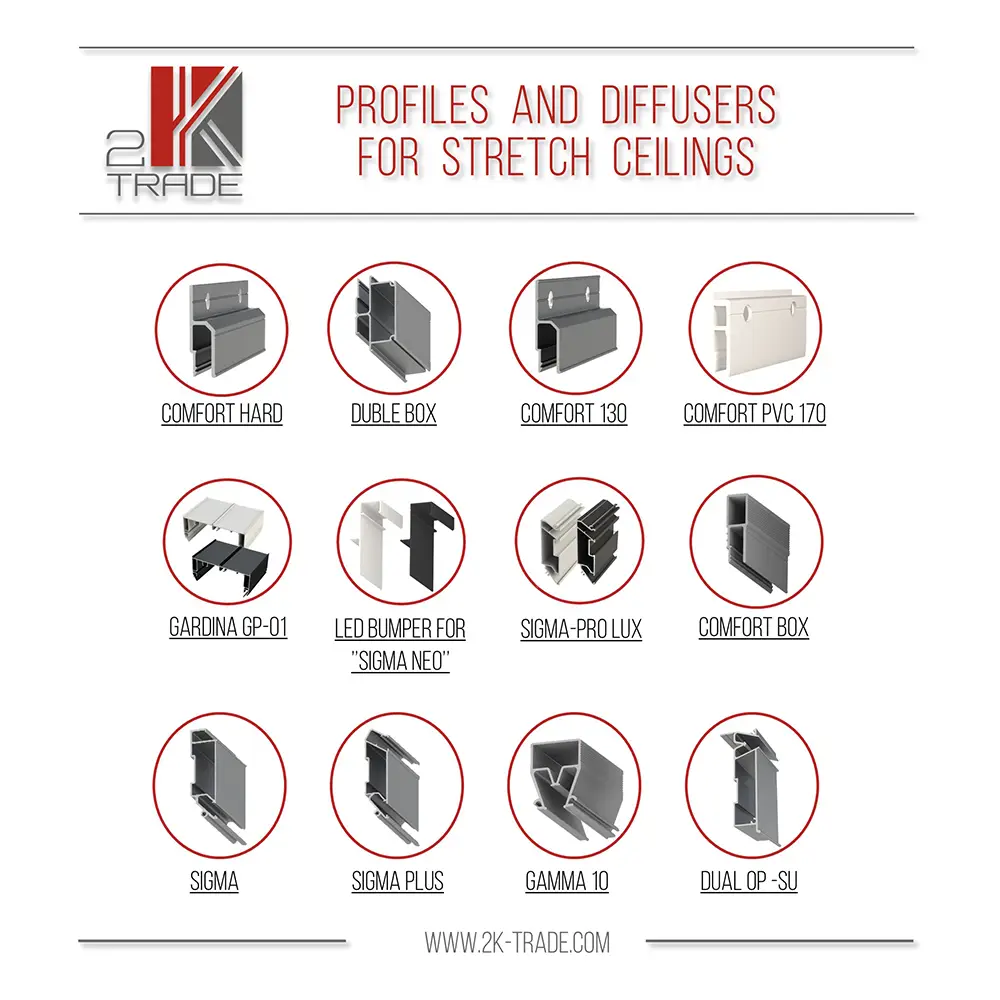
Catalogue of stretch ceiling profiles: CLASSIC and COMFORT series, ceiling-mount SU variants, shadow-gap