Recessed LED Profiles: Types, Installation and Component Selection
Guide to recessed LED profiles: types (GAMMA series for stretch ceilings, GK LINE






06.04.2026 | LED Lighting

LED aquarium lighting is a niche but rapidly growing application of LED technology. LEDs are replacing traditional fluorescent tubes and HQI lamps thanks to lower energy consumption, longer life (30,000-50,000 hours vs 6,000-10,000 for fluorescent tubes) and the possibility of precise spectrum selection. This article covers the technical requirements, parameter selection and installation of LED lighting for freshwater and marine aquariums.
Aquarium lighting has three functions: biological (plant photosynthesis, the daily rhythm of fish), aesthetic (showing the colours of fish and decorations) and technical (algae control). The lighting parameters are chosen first of all according to the tank type.
Aquatic plants need light of a suitable spectrum and intensity for photosynthesis. Key spectral ranges:
Colour temperature: 6000-6500 K (cool white) is the general recommendation for a freshwater planted tank — this colour imitates daylight and has a high blue content. The ranges vary by tank type (see below: fish-only and marine tanks).
Tanks without live plants have lower lighting requirements. Light mainly serves to show the colours of the fish and keep their daily rhythm. A colour temperature of 4000-6000 K (neutral to cool white) renders the natural colours of fish faithfully. Light that is too warm (3000 K) mutes the blue and green colours of tropical fish.
Marine tanks with corals need the highest lighting power and a specific spectrum. Symbiotic corals need light of 10,000-20,000 K (strongly blue) to sustain their zooxanthellae. Additional spectrum: 420-460 nm (actinic blue) stimulates coral fluorescence. In this application LED strips supplement dedicated spot fixtures.

Aquarium lighting intensity is measured in lumens per litre (lm/L). It is a simplified but practical measure used in fishkeeping.
| Tank type | Lumens/litre | Example: 200 L tank | Description |
|---|---|---|---|
| Fish without plants | 10-20 lm/L | 2000-4000 lm | Minimum lighting, showing the fish |
| Undemanding plants | 20-40 lm/L | 4000-8000 lm | Anubias, Cryptocoryne, mosses — shade-loving plants |
| Moderately demanding plants | 40-60 lm/L | 8000-12,000 lm | Vallisneria, most stem plants |
| Demanding plants | 60-120 lm/L | 12,000-24,000 lm | Carpet plants, red plants, Dutch-style tanks |
| Marine with corals | 80-150 lm/L | 16,000-30,000 lm | Hard corals SPS, LPS, soft corals |
The values are indicative. Deeper tanks need a greater luminous flux, because water absorbs part of the light — the deeper the tank, the more lumens are needed for the light to reach the bottom.
In aquarium applications the IP rating (Ingress Protection) is critical. The mounting location of the LED strip determines the required rating:
| Mounting | IP rating | Description |
|---|---|---|
| Above the aquarium (hood, frame) | IP20 (in a profile with a diffuser) | No direct contact with water, but exposure to water vapour |
| Above the aquarium (no hood) | at least IP65 | Exposure to splashes and water vapour; in the 2K-Trade range: 140 LED/m 24 V IP65 strip |
| On the aquarium edge or under water | IP67 / IP68 | Contact with water or immersion — strips of these ratings are not in the 2K-Trade range; this article is about mounting above the water |
Even when mounted above the aquarium (IP20 in a profile), moisture is a constant threat. Water vapour condenses on cooler surfaces (the aluminium profile) and can enter the LED channel through leaky end caps. Recommendation: use end caps with silicone sealing and ventilate the aquarium hood.
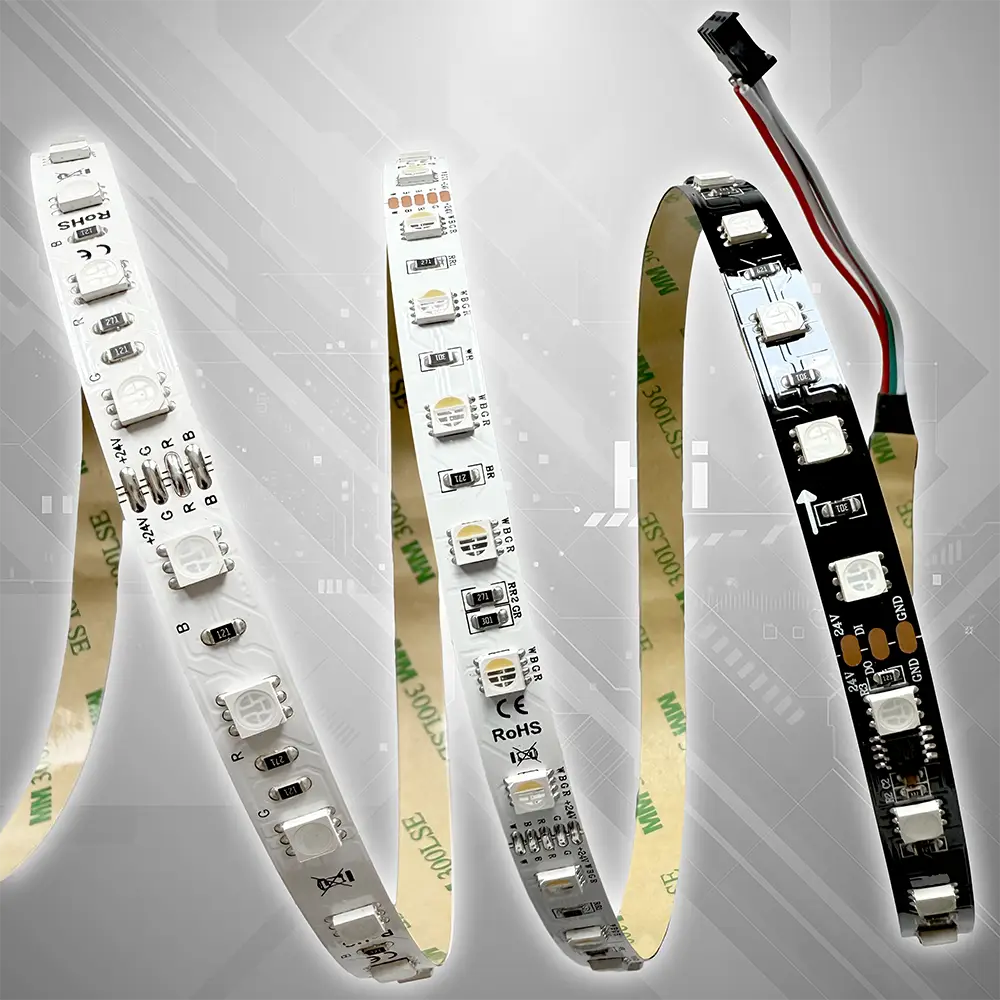
Choosing an LED strip for an aquarium depends on three factors: the required lighting intensity (lm/L), the spectrum and the mounting location.
The most commonly used in fishkeeping. A 6000 K strip gives a good spectrum for plants (high blue content) and renders fish colours faithfully. Recommended models from the 2K-Trade range:
CCT 120 LED/m 24V IP20 strips allow the colour temperature to be adjusted from 2700 K to 6000 K. They make it possible to simulate the natural daily cycle: cool light (6000 K) at midday, warmer (4000 K) in the morning and evening. Particularly beneficial for tropical fish, which in nature experience spectral changes during the day.
RGB 60 LED/m and RGBW strips allow the spectrum to be matched precisely to the needs of specific plants. By mixing the R, G and B channels, light of any shade can be obtained. In marine fishkeeping: maximising the blue channel (420-460 nm) to stimulate coral fluorescence.
The most common way to install LED aquarium lighting is in an aluminium profile fixed to the aquarium hood or on a stand above it. Installation steps:
The lighting time of the aquarium (photoperiod) affects plant growth and algae control:
Too long a photoperiod (over 12 hours) encourages an algae bloom, especially in tanks without CO2 dosing. A controller with a timer is a mandatory element of the installation — it removes the risk of forgetting to switch the lighting off. Controllers with a timer function are available in the category drivers for LED strips.
| Parameter | LED | Fluorescent tube |
|---|---|---|
| Lifetime | 30,000-50,000 h | 6,000-10,000 h |
| Energy consumption | Lower | Baseline |
| Replacement | Every 8-14 years | Every 1-2 years |
| Water heating | Minimal | Significant (IR) |
| Spectrum selection | Precise (RGB, CCT) | Limited to the manufacturer’s models |
| Dimming | Yes (PWM dimmer) | Requires a special ballast |
| Form | Flexible (strip, profile) | Rigid tube |
| Initial cost | Higher | Lower |
| Running cost (5 years) | Lower (no replacement) | Higher (2-3 replacements) |
Yes, provided it is mounted in a closed aluminium profile with a diffuser and sealed end caps, placed at least 5-10 cm above the water surface. The profile protects the strip from water vapour and splashes. In open-top tanks (no hood) it is safer to use an IP65 strip.
6000-6500 K (cool white). This temperature provides the high blue content needed for photosynthesis and at the same time renders the colours of plants and fish faithfully. For marine tanks: 10,000-20,000 K (strong blue).
It depends on the tank type. Fish-only tank (20 lm/L): 2000 lm needed. Planted tank (60 lm/L): 6000 lm. Divide the required flux by the luminous flux per metre of the strip given in its technical data — that gives the strip length you need. For a standard tank 60-80 cm long, 2-3 rows of LED strips in a wide profile are optimal.
Not the LED lighting itself, but a wrong photoperiod and a lack of biological balance. Algae develop when: (1) the photoperiod exceeds 10-12 hours, (2) there are no live plants competing for nutrients, (3) no CO2 is dosed under strong lighting. A controller with a timer and gradually increasing the photoperiod in a new tank (from 6 h) minimise the risk.
Only IP68 strips are intended for permanent immersion. IP67 strips withstand brief immersion. IP65 and IP20 strips are not suitable for immersion — IP65 protects against splashes, IP20 only against dust. IP67 and IP68 strips are not in the 2K-Trade range; the IP65 strip is available for mounting above the aquarium without contact with water.
LED aquarium lighting is an energy-saving and long-lived alternative to fluorescent tubes. The key selection parameters: colour temperature (6000-6500 K for plants, 4000-6000 K for fish), lighting intensity (10-120 lm/L depending on the tank type) and IP rating (IP20 in a profile above the water, at least IP65 above an open-top aquarium; submersible strips are not in the 2K-Trade range). A photoperiod of 8-10 hours a day with a timer controller prevents algae growth.
LED strips, power supplies and controllers with a timer function can be found in the categories LED strips and drivers for LED strips in the 2K-Trade catalogue. For questions about choosing lighting for a specific aquarium — contact the technical team.
Author: MB 2K-Trade
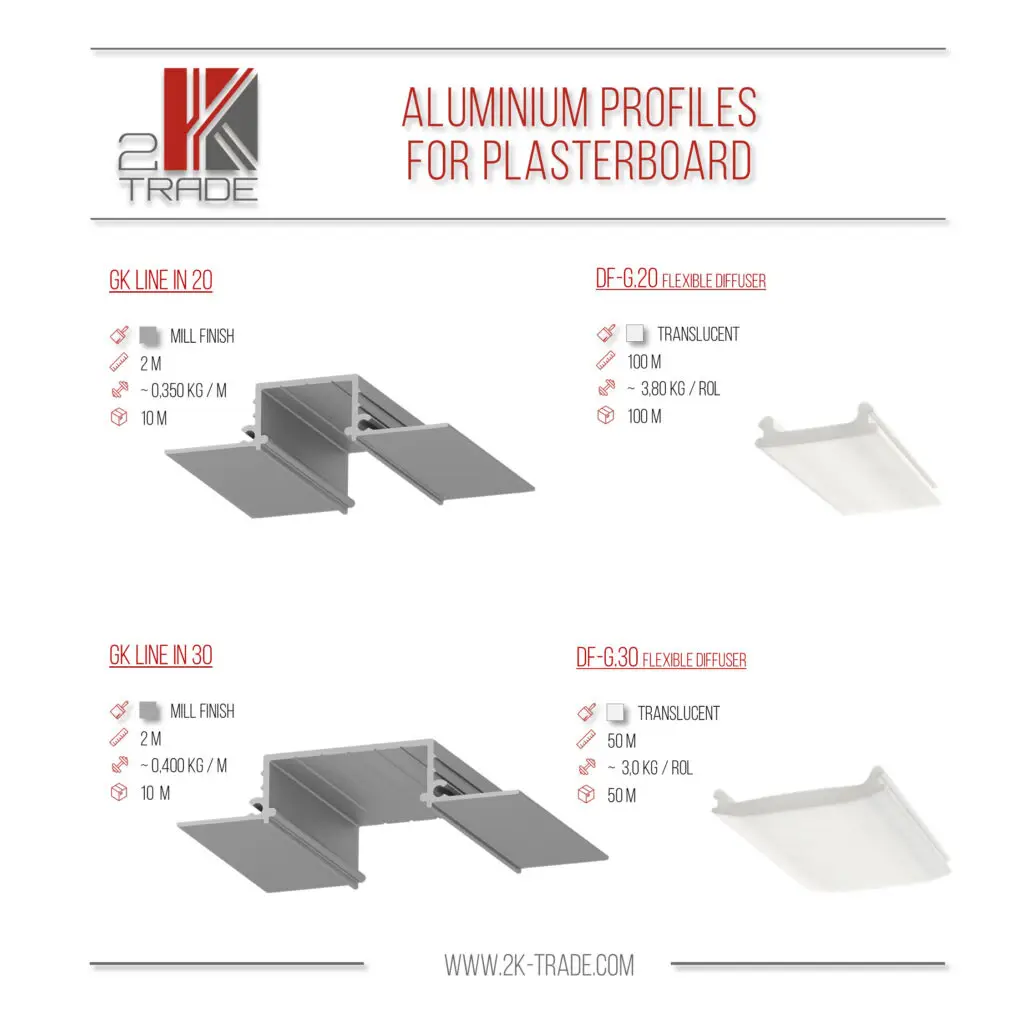
Guide to recessed LED profiles: types (GAMMA series for stretch ceilings, GK LINE
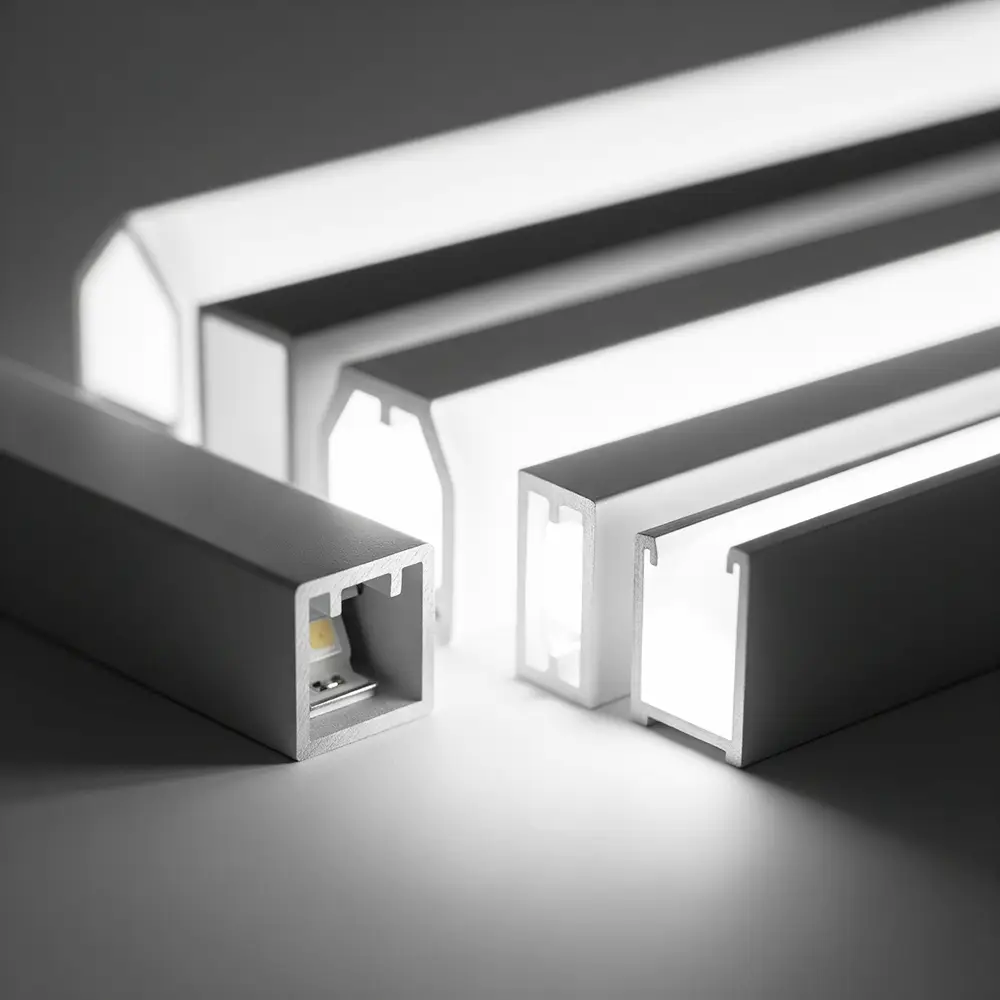
LED ceiling lighting refers to systems using LED strips, modules, or panels installed
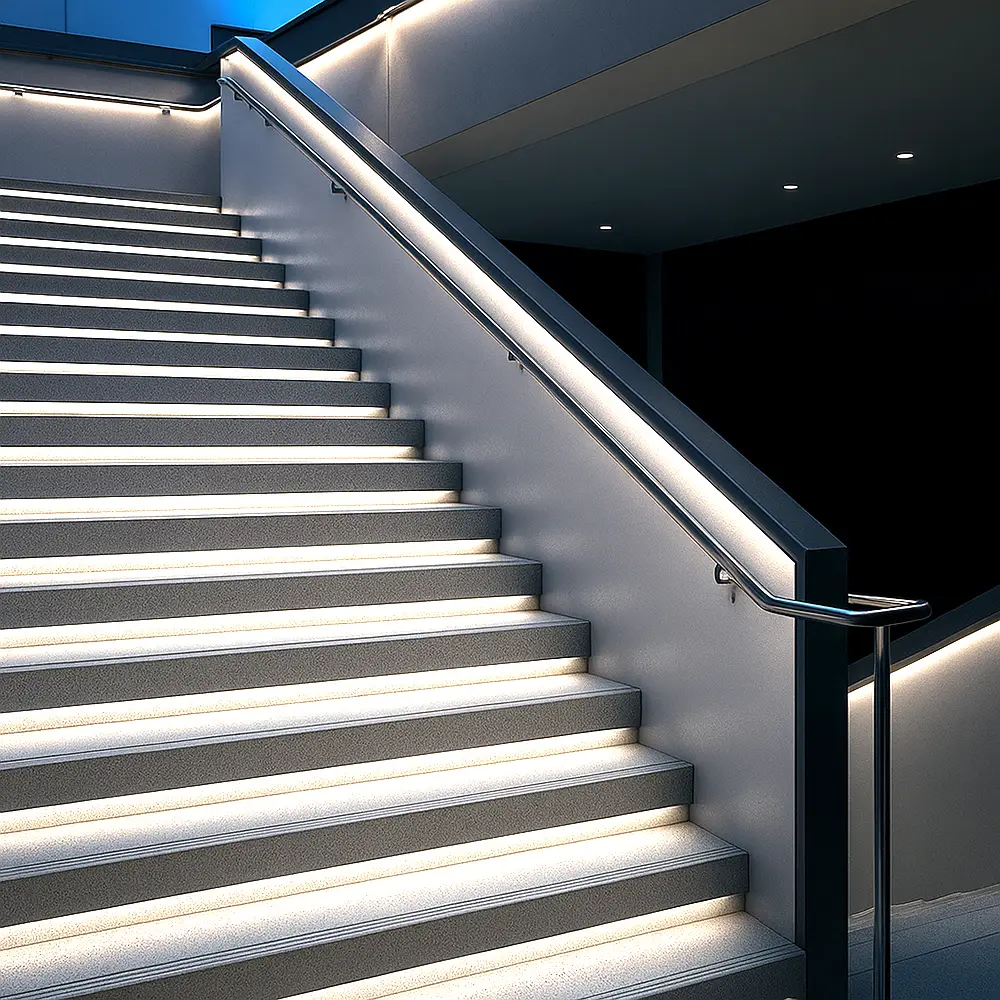
LED facade lighting is an outdoor lighting system based on LED strips rated